
After a severe hailstorm, you might think your solar panels came through unscathed. The reality is different — by EASA-certified drone pilot Guy Liebert, Droneview.be
After the recent severe hailstorm in Belgium, we at Droneview.be immediately received a series of calls from owners and companies wanting their solar panels inspected. That is understandable — when you see glass shards on the roof or notice cracked panels, you know there is damage and want it documented as quickly as possible for the insurer.
That visible damage is one story. Broken glass, crushed cells, ripped-off junction boxes — it’s clear, you photograph it, you file it with the insurer. Done.
But the calls that concern us most are from owners who say: “Everything looks fine, no broken panels, but my inverter has been showing less than usual for two days.” Or worse: the owners who notice nothing at all — not yet.
Hail damage to solar panels is 80% invisible to the naked eye — but very real and costly in the long term.
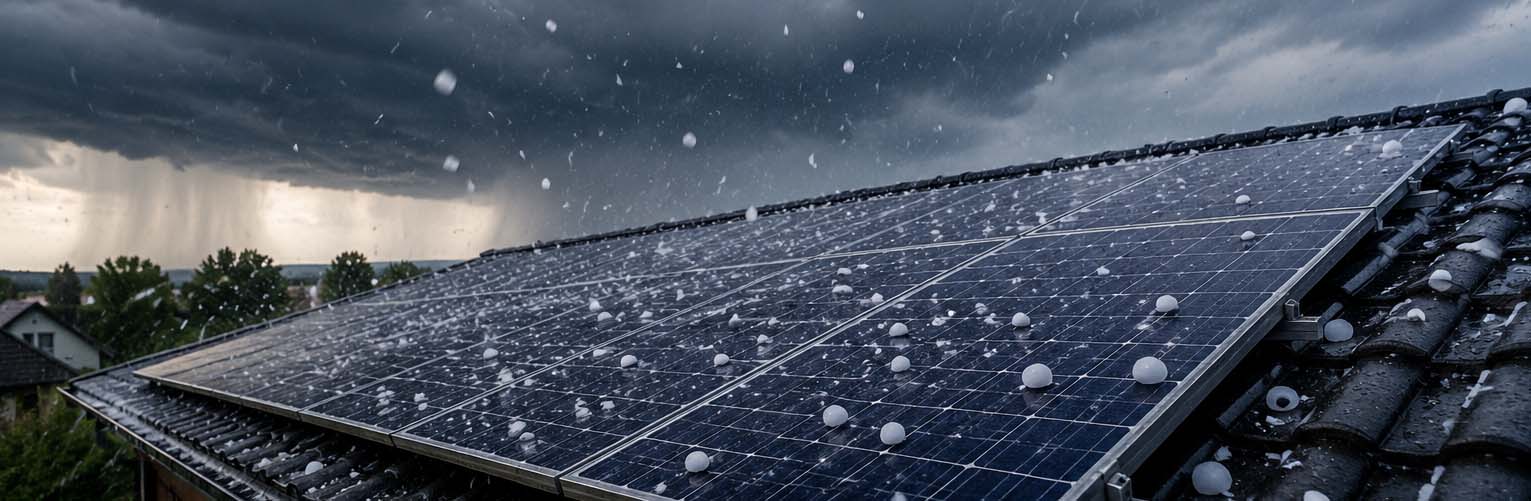
The Visible Damage: Cracked Panels and Glass Damage
Let’s start with what you can see yourself. With hail of 3 cm or larger, the chance of visible glass damage is real. Here is what we regularly find during inspections after hailstorms:
- Cracked or shattered glass — clearly visible, the panel is completely out of service and must be replaced
- Dented aluminium frame — structural damage that can cause water ingress into the panel
- Damaged junction boxes — often on the back of the panel, not visible from the front
- Torn cables or connectors — caused by the mechanical shock of the hailstones
- Damaged roof penetrations — not on the panel itself but on the mounting structure
For this visible damage, the procedure is clear: document, report to the insurer and replace. A drone inspection is enormously helpful here because we can photograph every panel up close without setting foot on the roof — including the back via low flights along the roof edge.
Why Hail Damage is Often Invisible
Modern solar panels have tempered glass that withstands hail up to a certain size. But “no broken glass” does not mean “no damage”. With hailstones of 2 cm or larger, microscopic cracks can form in:
- The PV cells themselves — so-called microcracks that damage the electrical circuit
- The encapsulant layer — the transparent layer between glass and cell that provides moisture protection
- The anti-reflection coating — damage reduces light absorption
- Internal connections — weakened solder joints from mechanical shock
This damage is invisible to the naked eye but immediately causes yield loss — and deteriorates progressively over the following months.
What Hail Damage Does to Your Yield
Microcracks in solar cells are not static. They expand under the thermal expansion and contraction that occurs every day as the panels heat up and cool down. A small microcrack after a hailstorm can develop within 6 to 12 months into a completely defective cell or string.
| Damage type | Immediately visible? | Yield loss | Thermally detectable? |
|---|---|---|---|
| Broken glass | Yes ✓ | Total loss | Yes ✓ |
| Microcracks in cells | No ✗ | 5-30% per affected cell | Yes ✓ |
| Damaged encapsulant | No ✗ | Progressive, months later | Yes ✓ |
| Hotspot from microcrack | No ✗ | Can damage neighbouring cells | Yes ✓ |
| Damaged wiring/connectors | Sometimes ✗ | Complete string failure possible | Yes ✓ |
How Thermographic Drone Inspection Detects Hail Damage
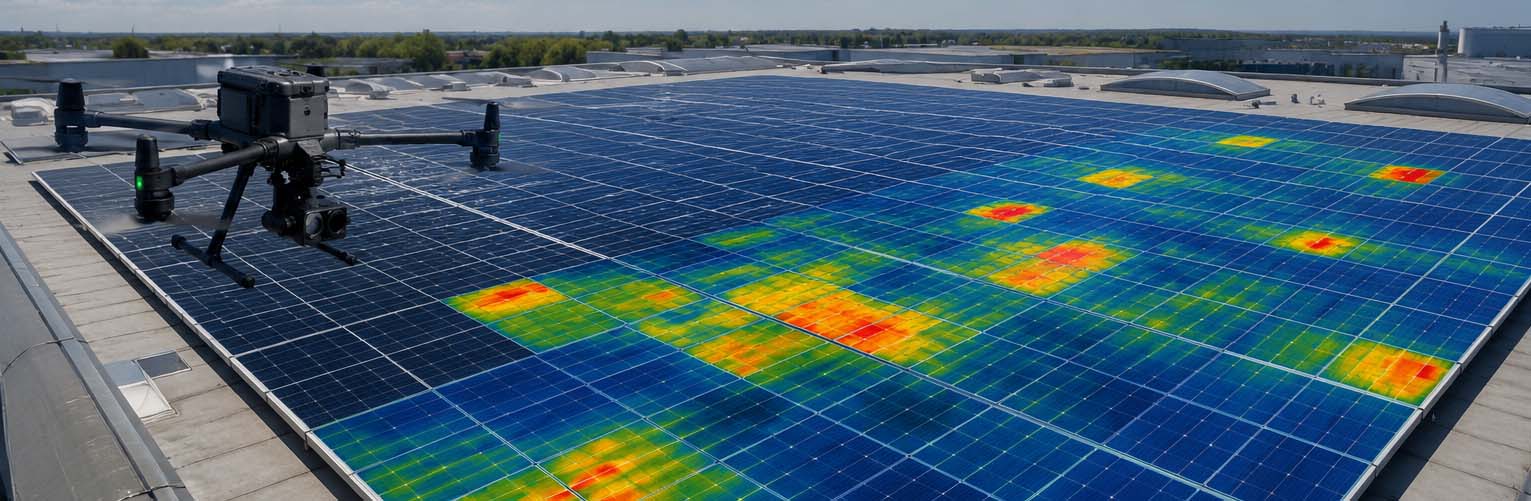
A thermal camera detects temperature differences of 0.05°C per pixel. A damaged cell or microcrack behaves differently from a healthy cell — it produces less electricity and converts that lost energy into heat. This makes the damage thermally visible as a hotspot.
The DJI Matrice 30T from Droneview.be combines a 48MP visual camera with a radiometric thermal camera. In one flight above your installation — without setting foot on the roof — we deliver:
- A complete thermal map of all panels with temperature deviations per cell
- Damage classification by severity — which panels must be replaced immediately and which should be monitored
- GPS-located report — the installer knows exactly which panel at which position is damaged
- Before/after comparison if a previous inspection was carried out
Why an Inspection Report is Essential for Your Insurance
This is where many owners leave money on the table. An insurance claim for hail damage to solar panels without objective evidence is regularly disputed or undervalued by insurers. A professional thermal inspection report:
- Objectively documents all damage — including the invisible microcracks that will cause problems later
- Provides a valuation of the yield loss — basis for your damage claim
- Is legally usable as evidence in case of dispute
- Prevents discussion about pre-existing damage vs. hail damage
— Guy Liebert, Droneview.be
Who is a Hail Damage Inspection Relevant For?
- Homeowners with a rooftop installation of 4 to 20 kWp — your insurance covers hail damage but requires proof
- SMEs and businesses with larger installations — higher stakes, professional report required
- Industrial companies with installations from 50 kWp — every percentage of yield loss counts
- Property managers and syndics of apartment buildings with shared installations
- Leasing companies and financiers of PV installations — asset protection
How Quickly Can Droneview.be Come Out?
After a storm, we try to prioritise urgent requests. For hail damage inspections, we apply a response time of 24 to 72 hours after your request, depending on location and weather conditions.
You receive the inspection report within 48 hours after the flight — fully documented and immediately usable for your insurer or installer.
→ Insulation Control and Water Infiltration Detection
→ Rates for our Drone Inspection Services
Has your installation suffered hail damage?
Droneview.be inspects your solar panels quickly, safely and without setting foot on the roof. Complete thermal inspection report for your insurer within 48h after the flight.