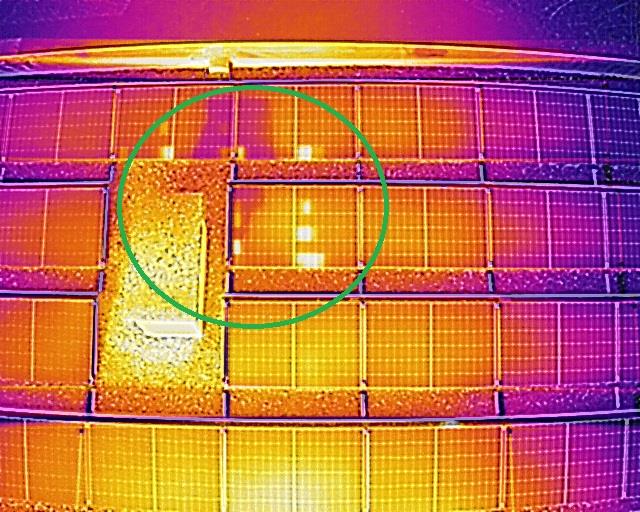

A solar installation rarely sends a loud signal when something stops working. An inverter that drops out, a string that no longer delivers current or a unit that keeps restarting: the installation still looks like one that works. The loss sits in kilowatt-hours you never see. This article explains how such a fault goes unnoticed, what PV monitoring does see, and what it does not.
Why your inverter app does not warn you
The app of your inverter is built to show what is delivered: today’s yield, this month, this year. What is missing, it does not show. If one inverter of an installation with three inverters drops out, the total simply shows a lower number. Anyone who does not compare that number against an expectation every day sees no difference between a cloudy week and a fault.
From practice. On top of that, not every fault raises an alarm. On a commercial installation, two inputs of one inverter were at 0 A, and the brand itself reported nothing. The inverter was running, the rest was delivering, and the loss disappeared in the total. Only those who look per input see it.
Recognising a fault yourself: a short checklist
Without monitoring you can still often suspect a fault early. Do this weekly, or after a period with a lot of sun:
- Look at the display or the light of the inverter during the day, in sunshine. An inverter that shows nothing, or a red or flashing message, needs attention.
- Compare with a sunny day last week, not with yesterday. Similar sun should give a similar yield. A clearly lower figure without explanation is a signal.
- Compare inverters with each other if you have more than one. Two identical inverters on identical panels should deliver about the same.
- Look in the app per inverter and per input, not only at the total. One string at 0 A disappears in the total.
- Note fault codes, time and a photo of the screen before you do anything. It helps your installer and your warranty.
Do not open an inverter yourself and only reset it as described in the manual. If in doubt: your installer.
Continue reading “Recognising an inverter fault: why a failure can go unnoticed for months”